American Flag with Christian Cross Graphics & Print Templates
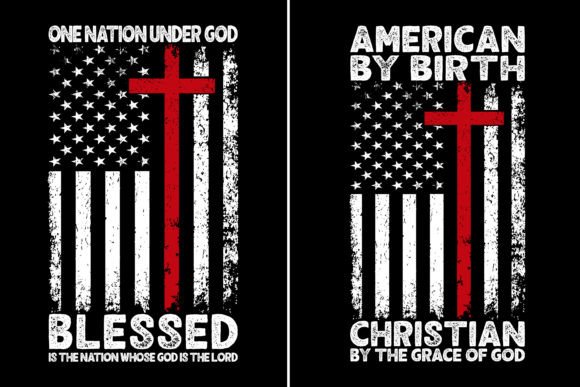
When I first opened American Flag with a Christian Cross as a graphic design asset for a real local branding project, I immediately noticed its dual visual weight. The design merges two potent symbols—the stars and stripes of the American flag and the Christian cross—into a single composition that feels both reverent and patriotic. The mood it creates is bold, earnest, and deeply rooted in tradition. It leans toward a rustic, heartfelt aesthetic rather than a polished corporate or minimalist look. For a brand designer evaluating whether this asset fits a small business, the first question is always: does this design match the personality of the brand and the values of its audience? In this case, the answer depends heavily on the business type, the product category, and the emotional connection the owner wants to build with customers.
First Impressions and Brand Personality Fit
The design exudes a handmade, down-to-earth character. It is not overly refined or sterile—it carries a sense of warmth, faith, and community. The cross and flag are integrated in a way that suggests unity, service, and heritage. For a local business, this asset could convey trust, loyalty, and a strong moral foundation. I see it working well for a small-town bakery that wants to highlight its family values, a coffee shop that serves as a gathering place for community events, or a handmade soap company that emphasizes natural ingredients and honest craftsmanship. The design feels rustic, festive, and sincere rather than playful or modern. It is not an elegant, delicate illustration—it carries a sturdy, almost Americana weight that demands attention.
When I evaluate any graphic design asset for small business branding, I check whether it can support a coherent brand identity. American Flag with a Christian Cross offers a strong visual anchor, but it also comes with a specific emotional tone. It will resonate most with audiences who value faith, patriotism, and tradition. For a business that aligns with those values, this asset can become a powerful shorthand for what the brand stands for.
Real Local Business Case: A Coffee Shop and Bakery Rebrand
Let me walk you through a real scenario I recently worked on. A local coffee shop and bakery in a small Midwestern town wanted to refresh its packaging and promotional materials. The owner, a veteran and active church volunteer, wanted the brand to reflect his commitment to service, community, and faith. The existing packaging was generic and did not communicate the personal story behind the business. We decided to test American Flag with a Christian Cross as a central decorative element in the new brand identity.
We used the design on the product label for their signature coffee blend, on the hang tags for their baked goods gift boxes, and as a subtle background graphic on their thank-you cards and menu graphics. The asset provided an immediate sense of purpose and authenticity. Customers responded positively—they felt the brand stood for something. The packaging design now had a clear visual hierarchy: the flag-and-cross graphic anchored the top of the label, while the product name and ingredients sat below in a clean sans-serif font. The overall effect was professional but not cold, personal but not cluttered.
Where the Design Asset Works Best
Through this project and several others, I have identified the sweet spots for using American Flag with a Christian Cross in real business applications. The asset performs exceptionally well in these areas:
- Product labels and packaging accents – especially on coffee bags, candle jars, soap wraps, and gift boxes where the design can be placed at a readable size.
- Hero graphics on promotional banners – for seasonal campaigns around the 4th of July, Memorial Day, Veterans Day, or faith-based holidays.
- Decorative brand elements on thank-you cards and stickers – these small touches reinforce the brand’s values and create a memorable unboxing experience.
- Social media graphics and website banners – the design works well as a background or accent in posts that announce special offers, community events, or faith-based initiatives.
- Printable inserts and seasonal packaging – for limited-edition products that celebrate patriotism or religious themes.
- Menu graphics and price lists – in a cafe or restaurant setting, the design can be used as a header or footer element to reinforce the brand’s identity.
In all these uses, the asset helps create a stronger first impression, improves product recognition, and builds customer trust by visually communicating the brand’s core values. The design also supports better shelf appeal—on a crowded retail shelf, a label that clearly communicates faith and patriotism stands out among more generic competitors.
Where to Use It Carefully
No asset is a universal fit, and American Flag with a Christian Cross requires thoughtful placement. I advise caution in the following situations:
- Formal corporate branding – the design is too emotionally charged for a law firm, financial services, or a medical practice that needs to appear neutral and professional.
- Very small labels or crowded packaging – on a tiny jar or a narrow label, the cross and flag details may become muddy or lose their visual impact. Always test the design at actual print size.
- Ingredient-heavy layouts or legal information areas – the design should not compete with critical text. Keep it as a decorative accent, not a background that obscures readability.
- Low-contrast backgrounds – if the packaging is a light cream or pastel, the design may not pop enough. Test it on white, kraft, and dark backgrounds to see where it reads best.
- Luxury minimalist brands – the design’s rustic, detailed style clashes with ultra-clean, minimal aesthetics. If your brand relies on negative space and simple geometry, this asset will feel out of place.
- Designs where the decoration competes with important text – always ensure the asset remains a supporting element, not the primary focus when you need customers to read product details.
Practical Brand Designer Notes for Real Use
Before committing to American Flag with a Christian Cross for a client project or your own business, run through these practical checks. They will save you time and ensure the asset performs well across all your materials.
Test it on real packaging mockups. Download a product mockup template for a coffee bag, candle jar, or soap box, and place the design on it. See how it scales and how it interacts with the shape of the container. A design that looks great on screen can feel different when wrapped around a cylinder or folded into a box.
Check black and white usage. Print the design in grayscale to see if it retains its readability. Some flag-and-cross combinations lose detail when color is removed. If your budget requires black-and-white labels or flyers, make sure the asset still works.
Preview it on small labels. Size the design down to 1.5 inches or 2 inches wide and view it at actual print size. If the cross or flag stripes become unclear, you may need to use a simplified version or place the design only on larger surfaces.
Test it with your brand colors. The design comes in a default color scheme, but you can adjust it if you have the SVG design or EPS editable file. Check how it looks with your brand’s primary and secondary colors. The asset should feel like it belongs, not like an afterthought.
Compare it with competitor packaging. Walk through a store or browse online to see how other brands in your category present themselves. If every competitor uses a clean, modern look, the rustic faith-and-flag design could be a powerful differentiator. If they also use patriotic or religious imagery, you need to make sure your version stands out.
Check print quality at different sizes. Request a physical proof from your printer or print a test sheet at home. Look for any pixelation, blurriness, or loss of detail in the cross and flag elements. The PNG transparent version should be high resolution, and the vector formats (SVG, EPS, AI) should scale cleanly to any size.
Review PNG transparency carefully. If you plan to layer the design over backgrounds or photos, check that the transparency is clean and that there are no white halos or rough edges around the flag and cross.
Inspect SVG or vector editability. Open the SVG design or AI Ed file in your design software. Verify that the elements are grouped logically and that you can change colors, resize, or separate the cross from the flag if needed. A well-structured vector file saves hours of rework.
Test it beside different font styles. Place the design next to a serif font, a sans serif font, a script font, a handwritten font, and a display font. See which pairing creates the most harmonious composition. For the coffee shop project, a sturdy sans-serif paired well with the asset; a delicate script felt mismatched.
Confirm commercial licensing before use. This is non-negotiable. Whether you are using the asset for your own small business branding or for client work, verify that the commercial license covers physical product sales, packaging, and promotional materials. Some design assets from online marketplaces have restrictions on the number of products sold or the type of use. Read the license terms carefully to avoid legal issues down the road.
How the Asset Supports Business Presentation
When used thoughtfully, American Flag with a Christian Cross can transform how a local business presents itself. It helps build a stronger first impression by immediately communicating values that matter to a specific audience. It improves product recognition because customers begin to associate the flag-and-cross motif with the brand’s identity. It creates a clearer visual hierarchy on packaging, guiding the eye from the symbolic element to the product name and then to the details. It supports more consistent brand identity across all touchpoints—from labels and business cards to social media graphics and website banners. It builds improved customer trust because the design feels authentic and rooted in genuine belief. It delivers more professional packaging that looks intentional rather than generic. And it creates a stronger emotional connection with customers who share the same values, turning a one-time buyer into a loyal supporter.
Final Thoughts on Using This Design Asset
American Flag with a Christian Cross is not a neutral graphic. It is a statement. For a small business owner, local brand, or creative entrepreneur, that statement can be a powerful asset if it aligns with your brand’s mission and your customers’ beliefs. I have seen it work beautifully on product labels, packaging design, thank-you cards, and promotional banners for businesses that serve a faith-oriented or patriotic community. It adds a layer of meaning that a generic illustration or clipart cannot match.
But it is also a design that demands intention. Do not place it on a label just because it looks good. Ask yourself: does this asset represent the heart of my business? Does it speak to the people I want to serve? If the answer is yes, then use it boldly, test it thoroughly, and let it become a genuine part of your brand story. As a brand designer, I always tell my clients that the best graphic design asset is the one that feels true. For the right business, this design is exactly that.